Product··6 min
Prefab fence panels versus stick-built: the honest math.
What a panelized fence changes on install day, and the two cases where stick-building is still the right call.
NorthStar
/Company
What a panelized fence changes on install day, and the two cases where stick-building is still the right call.
In British Columbia and Alberta, most residential wood fence goes up as prefabricated panels: built flat in a shop, trucked to site, dropped between posts. In Ontario, the habit is still stick-building: a crew cuts rails to length, nails pickets on one at a time, and builds the fence standing up in the yard. We manufacture panels in Bolton, so we obviously have a side in this argument. Here’s the honest version of it anyway.
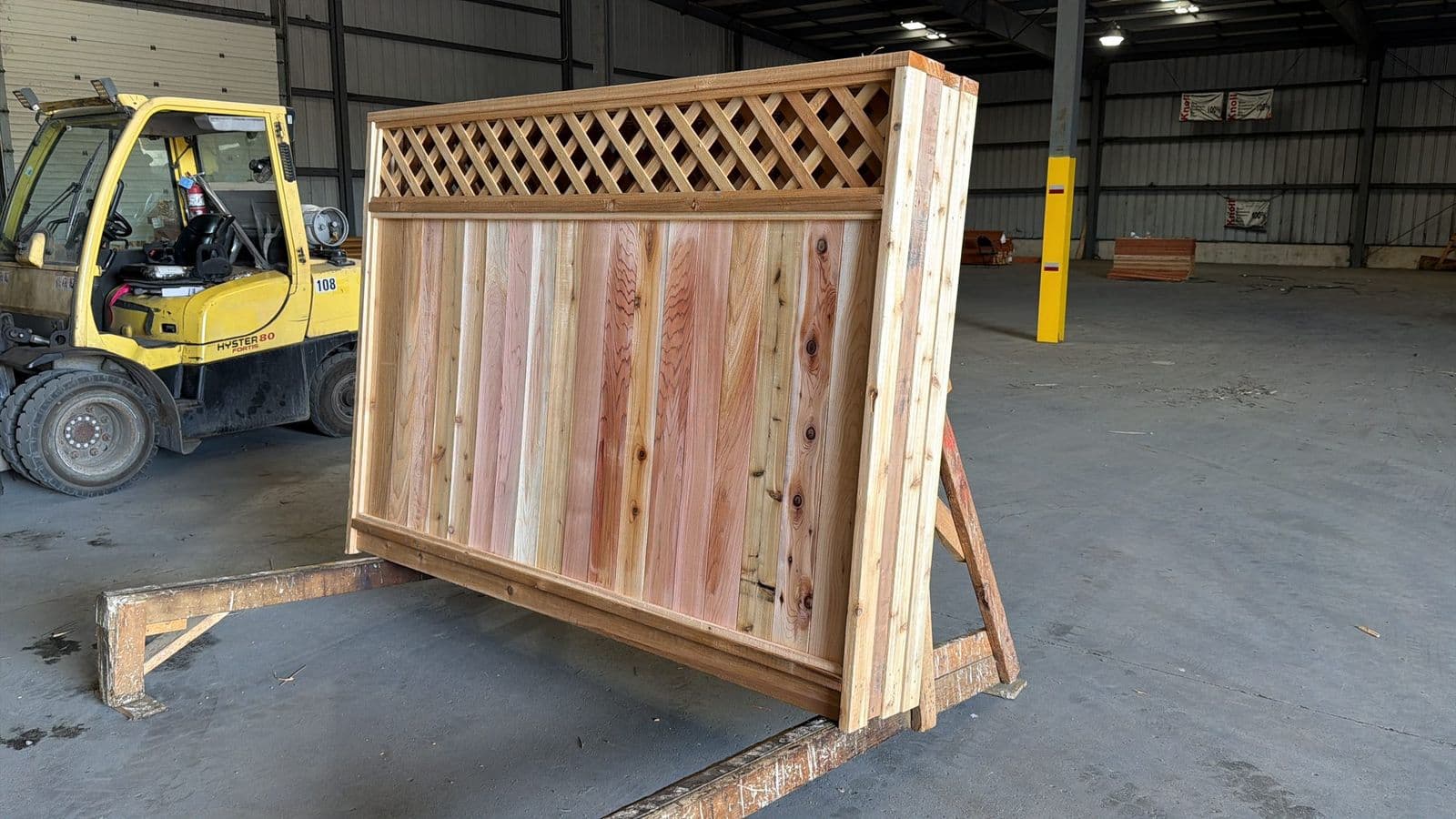
A panel is a fence section built in a jig before it ever sees your yard. Ours are 6 ft × 8 ft, assembled flat on a table, under a roof, out of the weather, with the fastener schedule done by the same jig every time. Square is the whole point: the frame is clamped when it’s fastened, so the reveal at the top of the fence line is identical at panel one and panel forty. A stick-built fence is only as consistent as the crew’s worst hour of the day.
The money side is labour. On an installed wood fence, labour is roughly half the invoice, often more. Stick-building spends that labour twice: once digging and setting posts, then again cutting rails and nailing hundreds of pickets in place. With panels, the second half nearly disappears. Once the posts are set and the concrete has cured, a two-person crew hangs panels about as fast as they can carry them. A 100-foot run is an afternoon of hanging, not days of nailing.
That’s also what changes the do-it-yourself math. Building a fence from loose lumber is carpentry; hanging panels between posts is assembly. If you can set a post plumb (or hire out just the post-setting and hang the panels yourself), you can put up a straight, square fence without owning a compressor.
Now the honest part. Stick-building still wins in two places. The first is steep grade: a stick-built fence can rack, leaning each bay slightly to follow the slope, where panels have to step down a hill in level runs. Gentle grades step cleanly; severe ones can look wrong stepped, and racking is the right call. The second is replacement runs where the old posts are staying. Panels want 96 inches on centre. If you’re keeping thirty-year-old posts set at 89, 93 and 102 inches, cutting panels down to fit erases part of what you saved.
If you’re a landscaper, this is the part that matters: panels are how you offer fencing without carrying a fence crew. Your existing crew already digs, sets posts and pours concrete; hanging panels is the easy half. The fence becomes a line item you self-perform instead of a subcontract you mark up and wait on. In BC that’s been the normal arrangement for years; the landscaper does the fence. Ontario is catching up.
The catalogue is at /products and the trade program is Polaris Pro. If you want to see how a panel is put together before you commit to forty of them, come by the shop in Bolton and we’ll stand one up for you.