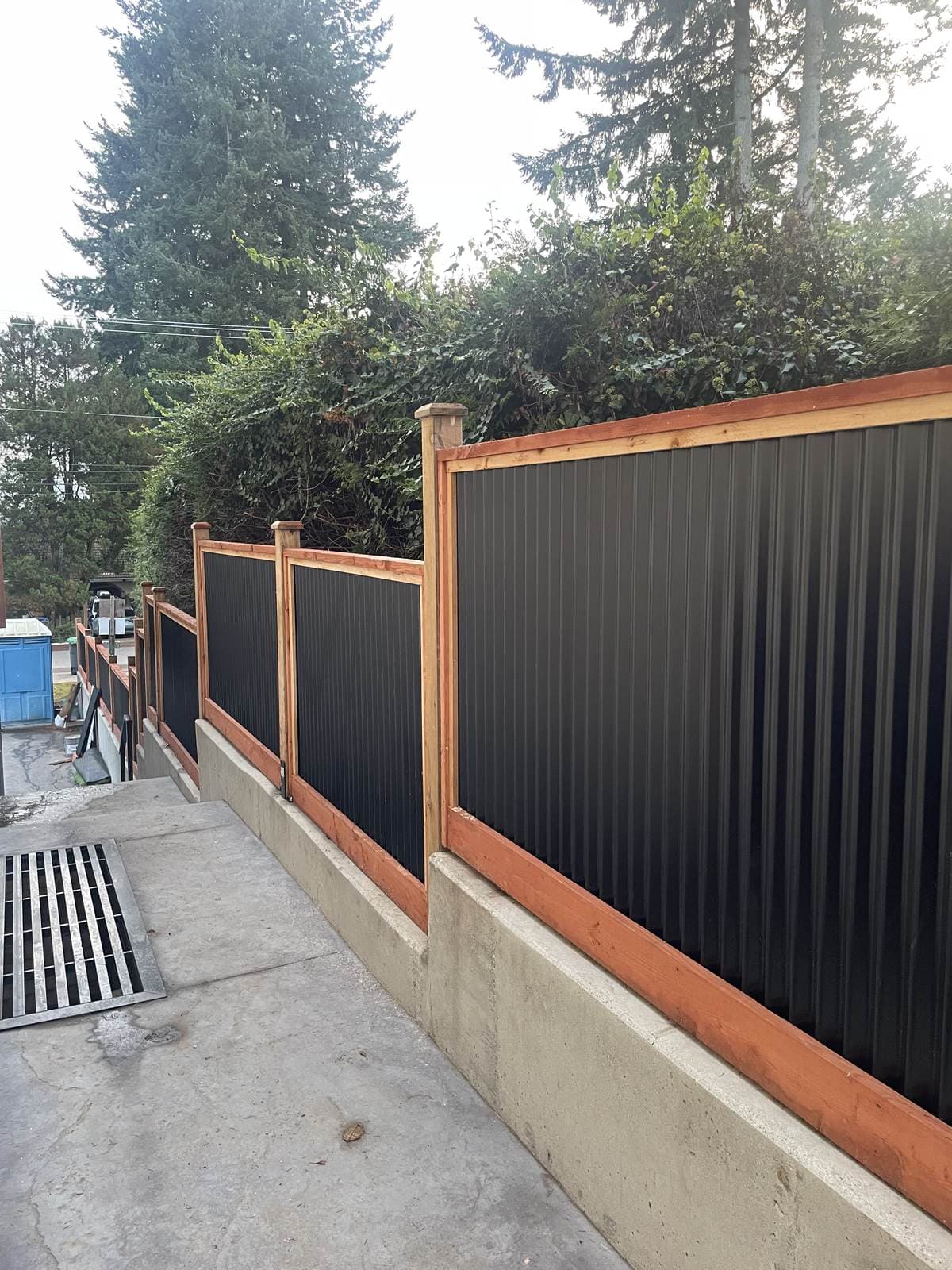
The steel is the one part of a wood-and-steel fence that an Ontario winter does nothing to. Minus 25 does not crack it, freezing rain slides off it, and the shovel that splits a cedar board bounces off a corrugated face. What winter works on is everything around the sheet: the posts, which frost tries to lift; the wood frame, which freezes and thaws all winter; and the snow, ice and salt that pile against a solid face on a driveway or a road. A metal fence that comes through March straight is a post job first and a spring check second, the same as a wood fence.
Frost heave is the post's problem
Ground freezes from the top down, and the ice grabs whatever is in it. A post set above the frost line is lifted an inch or two each winter and does not come all the way back down; by the third year the panel tops are out of line. The fix is the one in the installation guide and the post-depth post: 48 in. in the ground across most of southern Ontario, deeper to the north and east; a 10 ft post so 6 ft stands above grade; 6 in. of clear-crush gravel under it; 30 MPa concrete to grade with a crown that sheds meltwater away from the post, and none of the fast-setting bags, which crack inside two winters. None of this is different for steel; what differs is the cost of getting it wrong, because a framed steel panel hung out of square shows it in every rib.
Snow against a solid face
A solid steel face is a wall to the wind, and in winter that makes it a snow fence: drifts build on the lee side, and wet snow in a thaw weighs far more than the fluff it fell as. The bottom rail carries that load, and it will carry a drift, but a drift that melts and refreezes into a block of ice against the rail is a lever on the fasteners every time the wind moves the panel. So pull snow back from the bottom rail before it turns to ice, do not pile shovelled or blown snow against the fence, and aim the snowblower chute away from the run: a chunk of ice off a chute can dent a sheet, and a dent is permanent. The lattice top bleeds some wind over the fence line and drifts less than the full face, a reason to choose it on an open lot with no trees yet.
Thermal movement
Steel moves with temperature. Between a January night and a July afternoon the face of a black panel swings through 80 degrees Celsius or more, and across the width of the panel that is a couple of millimetres of growth and shrink. What turns that movement into a problem is a fastener through the sheet: it fights the sheet every cycle and works its hole oval, and an oval hole in a finish is where water sits. Our panel has none; every fastener goes through the frame, and it should stay that way. The ticks from a metal run on a cold sunny morning are the sheet adjusting, not a fault.
Ice
Freezing rain glazes a fence face. On black steel the glaze goes on and comes off: the sheet warms in even a January sun, and the ice lets go of it sooner than it lets go of a wood board. What you do not do is chip ice off the frame with a shovel edge, which takes the stain with it, or off the face with anything harder than a broom.
Salt near the driveway and the road
Road salt attacks bare metal, and the driveway side of a fence gets a coat of it from every pass of the plough. On a finish that is whole it is cosmetic, a white haze that a hose takes off; on a scratch that reaches metal, salt water is the fastest route to rust there is. So the driveway-side panels are the ones to walk before the first snow: touch up any scratch that reaches metal, the way the black steel post describes, then rinse those panels on the first warm day in March. The bottom rail is the part that sits in salt slush, and on a driveway run it is worth setting the rail a hand above the pavement rather than at the 3/16 in. minimum, so the plough's windrow is not against the wood; the posts stay at 96 in. on centre.
The frame in winter
The frame is stained wood, not cedar, and it is the part of the panel that has a winter. Freeze and thaw open the grain a little more each year, the stain is what keeps water out, and the bottom rail and the end grain at the corners are where the coat wears first. A fresh coat on a many-years cycle, put on in a dry September, is the whole maintenance list.
Wind
The strongest winds of the year come between November and March and load a solid face harder than any summer storm. Everything the wind puts into the face goes into the posts, so a 6×6 at the corners and gates, concrete to grade and a full cure before the panels hang are what hold an exposed run. The install post has the whole sequence.
The spring check
Fifteen minutes in April. Sight along the post tops for one that has lifted, and look at the crowns for cracks that hold water. Push on each panel: a rattle is a fastener that has backed out of the frame, and it goes back in with a driver. Walk the driveway side with a cloth for scratches and salt, swing the gate, then rinse the face and leave it alone until September, when the frame gets its coat.
Installing in the cold
Panels do not care what month it is; the concrete and the digging do. Frozen ground is slow to dig and cold concrete needs blankets and a longer cure, so the calendar for a winter fence is posts in October or November before the ground freezes, and panels hung the same month or in the first dry week of April. The solid panel and the lattice top are $169.99 on the page all year, picked up free or delivered within about 100 km of Bolton for $200 for up to 40 panels plus HST, and both are on the Wood & Steel page.