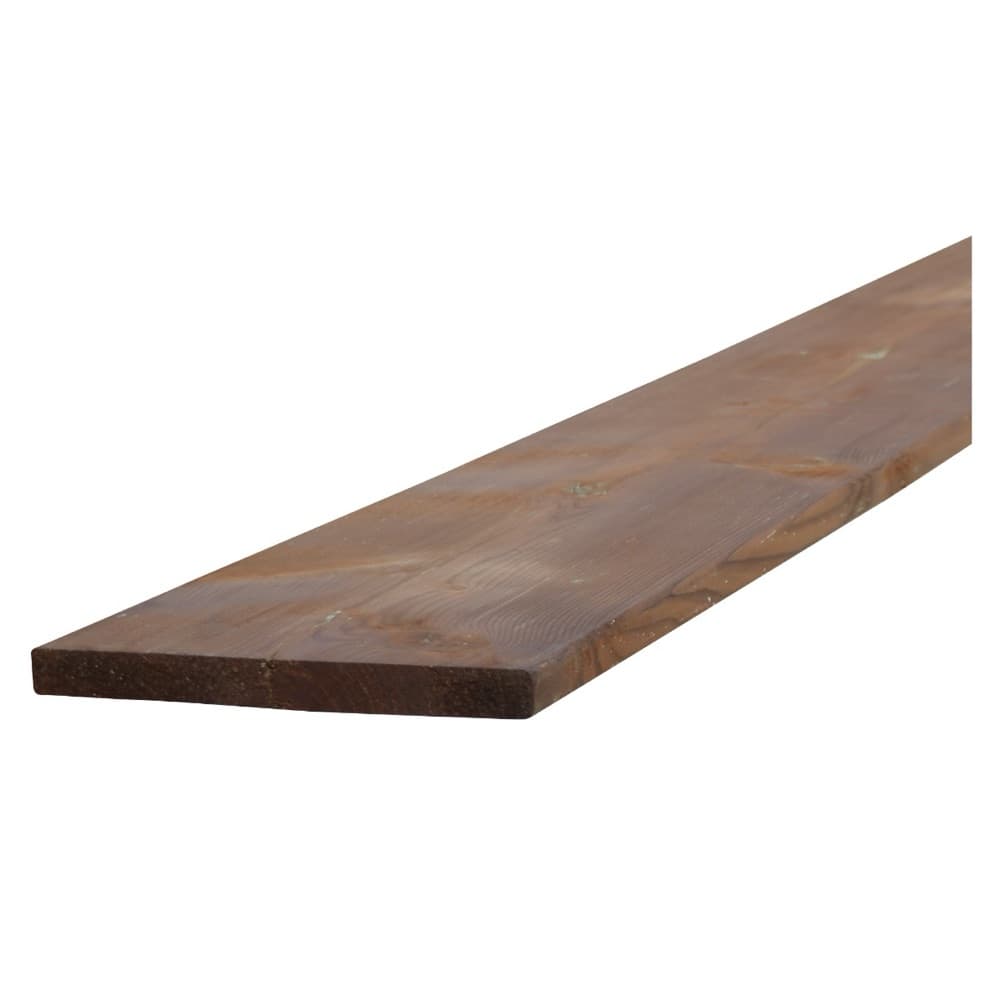
A fence board is the 1×6 picket that faces the yard, and every pressure-treated one looks about the same in the rack: brown-ish, damp, stamped on the end. But there are two grades hiding in that bin, and the difference doesn’t show up at the till. It shows up a summer later, when one fence still reads straight and the other has gone wavy. Here’s what actually separates a premium pressure-treated fence board from a standard one, and why the gap matters more than the two-dollar sticker.
Colour: built-in brown vs. raw green
Start with the visible one. A standard treated board comes off the line green (the raw tint of the preservative) and you’re expected to weather it or brush on a stain yourself. A premium board has the brown colour built into the treatment: a uniform, finished brown the day it goes up, no staining step, no blotchy patches to chase later. Looks are only part of it. Staining a fresh fence is a weekend you don’t get back, multiplied by every board, and a built-in colour means the run reads even instead of streaky while it settles.
Moisture: kiln-dried vs. wet
This is the one that matters most, and it’s the one nobody points out in the aisle. Standard treated lumber ships wet. It comes out of the treatment cylinder soaked, sometimes dripping, and it dries out in your fence over the first summer. As it dries, it moves: it cups, it twists, it shrinks, and gaps open between boards that were tight the day you installed them. A kiln-dried board has had most of that water pulled back out in a kiln before it ever reaches you. It’s lighter to carry and takes a fastener cleaner. More to the point, it has already done most of its moving, so the fence you build is close to the fence you keep.
Dimensional stability is the real cost
It’s worth being concrete about what “moving” does to a fence, because that’s where the cheap board gets expensive. A board that cups pulls its edges up off the rail, so the face of the fence stops being flat. A board that twists throws the top line out of true, and you see it from across the yard. A board that shrinks opens daylight between pickets, which quietly deletes the privacy you paid for. A wet standard board does all three as it dries down; a kiln-dried premium board mostly doesn’t. The cheapest board costs more later: you either replace the ones that moved, or you live with a fence that looks a year older than it is.
Rating and grade
Two more differences worth knowing. First, a fence board is an above-ground component (it never touches soil, because that’s the post’s job), so it’s treated to an above-ground standard rather than the heavier ground-contact treatment a post gets. Match the piece to its role: boards above ground, posts in the ground. Second, premium stock is graded harder (fewer knots, fewer splits, straighter pieces), so more of the bundle actually goes on the fence instead of the offcut pile. A cheap board is cheap partly because you sort the usable ones out yourself.
The honest big-box comparison
The big boxes sell both grades, and it’s worth knowing which one you’re looking at. Their cheapest board is the green, wet, standard one. Their premium line, usually sold as a “premium kiln-dried” or brown fence board, is the same class of board we stock, and it’s priced accordingly. So the useful comparison isn’t our board against their cheapest; it’s premium against premium. That’s the comparison where we come in under the big box’s premium board, because we buy it by the unit and sell it factory-direct from one yard in Bolton instead of trucking it through a national supply chain. Same grade of board, a shorter path to you.
When standard is the right call
To be fair to the cheap board: it has its jobs. A temporary line, a hidden run behind a shed, a rental where the budget is the whole spec: a standard green board does the work and saves you a little. Premium earns its money on the fence you actually look at: the backyard, the street-facing line, the run long enough that one cupped board in ten shows. If the fence is a formality, buy the formality. If the fence is part of the yard, buy the board that stays put.
What we sell by the piece
Ours is the premium board: brown, kiln-dried, above-ground rated, with the colour built in, and the same stock we pick through to build our own privacy and shadowbox panels. It’s the 1×6 × 6 ft board for standard fences and the 1×6 × 5 ft for lower runs, both on the pressure-treated page with per-piece pricing. Priced below the big box’s premium board, pickup at our Bolton yard. If a board does cup on you, the cause is almost always the install, not the lumber (here’s why fence boards cup), and if you’re still deciding between treated pine and cedar for the whole fence, that comparison is here. Building a whole run? Our pre-built panels save you the board-by-board labour, but if you’re building it yourself, buy the board that stays put.