If you search “fencing lumber,” you’re really shopping for four or five specific pieces: the posts, the rails, the boards, and the bits that finish them. A wood fence isn’t one product; it’s a short list of pressure-treated lumber cut to a few standard sizes. Here’s the complete list, what each piece does, the sizes that matter, and how to buy it by the piece instead of by the unit on a membership.
Posts: 4×4, and 6×6 where it counts
The posts are the fence: everything else hangs off them, and they’re the part that lives in the ground, so they’re the piece to get right. A standard residential fence runs 4×4 posts on 8-foot centres. Length follows depth. In the GTA you’re setting roughly 48 inches down to clear frost, so a 6-foot fence wants a 10-foot post: 48 inches buried and six feet up. An 8-foot post set that deep stands four feet above grade, the length for a 4-foot fence. Use 6×6 posts at the gates and corners, where the leverage is highest: a gate hangs its whole weight off one post, and a 6×6 won’t rack. Posts are ground-contact rated, a heavier treatment than the boards, because they’re the only part touching soil. How deep, and concrete versus gravel, is its own decision, covered in how deep to set a fence post in Ontario.
Rails: 2×4, the frame between the posts
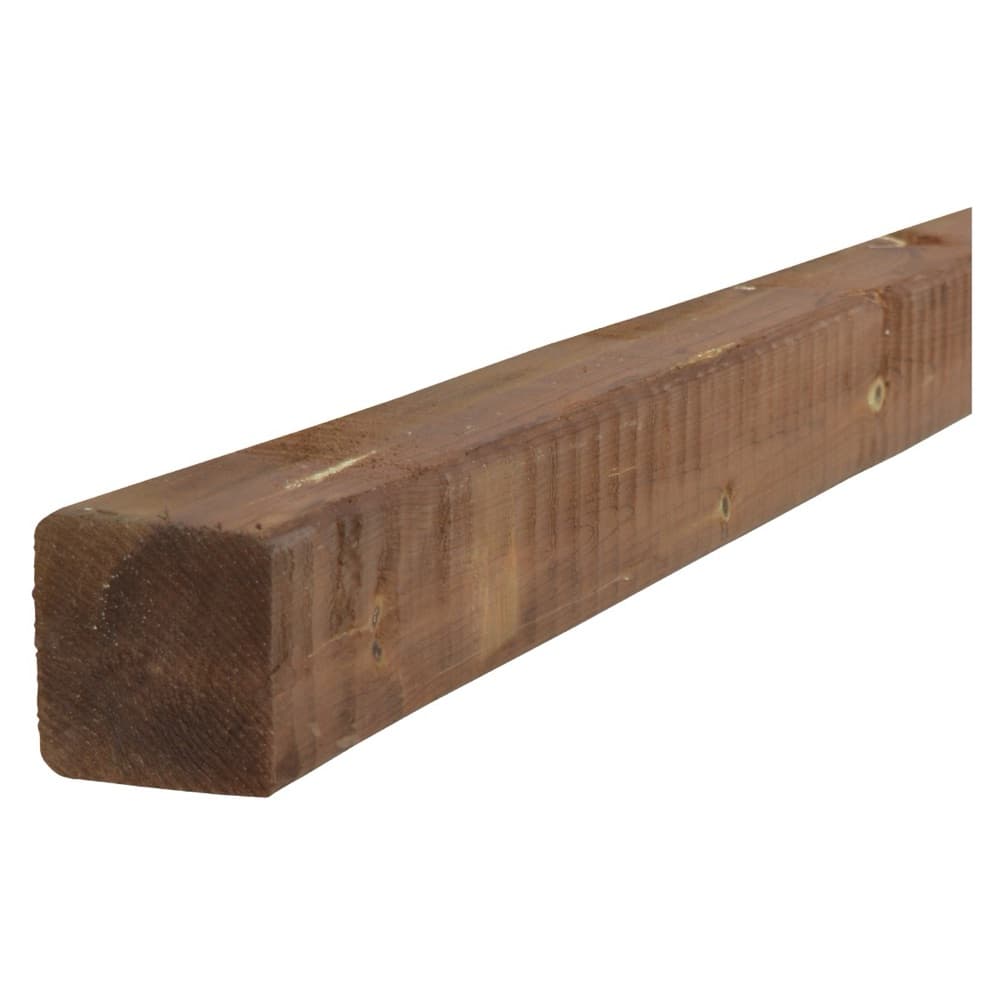
The rails are the horizontal frame the boards fasten to: two for most fences (top and bottom), three on a taller run or a heavier board. A 6-foot fence section spans 8 feet between posts, so the workhorse is a brown pressure-treated 2×4 in 8-foot lengths. Ours is premium and kiln-dried, so the frame goes up straight and stays straight instead of twisting a rail off the line as it dries down.
Boards: 1×6, the face of the fence
The pickets are what everyone sees, and they’re where a premium board pays for itself. A 1×6 fence board covers the run; a 6-foot fence uses the 6-foot board, a 4- or 5-foot fence the 5-foot cut. This is the piece we’re most particular about: kiln-dried and above-ground rated, with the brown colour built into the treatment, so it doesn’t cup, twist and gap the way a wet green board does through its first summer. The full case for premium over commodity is in premium versus standard pressure-treated.
Lattice and nailing strips: the finishing pieces
A lattice-top fence crowns the solid section with a strip of lattice for light and air; a 1×8 pressure-treated lattice strip does that job. Nailing strips, the thin furring pieces, fasten boards and lattice to the frame. Neither is the star of the fence, but leaving them off the list is how you end up back at the yard mid-build.
How much of each for a run
The quick estimator, per 8-foot section: one post (plus one extra to close the end of the whole run), two to three 2×4 rails, and enough 1×6 boards to cover eight feet: 16 to 17 with 3/16 in. gaps for a solid run, or about 12 a side, 24 in all, for a shadowbox. So a 40-foot fence is five sections: six posts, ten to fifteen rails, and roughly 85 boards solid or 120 for a shadowbox. The lumber page prices one section of each build from the per-piece prices. Multiply by the per-piece price on each product page and you’ve built your material cost before anyone quotes you. The labour side, usually the bigger half of an installed fence, is in what a wood fence actually costs in the GTA.
Buying it by the piece
The big boxes sell all of this too: by the unit, on a membership, priced to the shelf. We sell the same fencing lumber by the piece, factory-direct from the Bolton yard and priced below the big box: one board or a thousand, no account, no bulk-only minimum. It’s the same premium brown stock we build our own fence panels from, which is the other way to buy: if you’d rather skip the board-by-board build, the panels arrive finished and drop between your posts. Either way, the full fencing-lumber list sits on the pressure-treated page with every per-piece price, and a full-run bulk quote is a call to 647-569-2163.