Craft· · Updated ·5 min
Fence panel sizes: nominal versus true dimensions.
A “6×8” panel is not 72 by 96 inches, except when it is. How to lay out a fence run against the numbers that matter.
NorthStar
/Company
A “6×8” panel is not 72 by 96 inches, except when it is. How to lay out a fence run against the numbers that matter.
Lumber has been lying about its size for a hundred years, politely. A 2×4 is 1½ by 3½ inches; everyone in the trade knows it, and nobody resets the name. Fence panels inherited the habit: “6×8” is the trade size, the name of the format, not a promise that your tape measure will read 72 by 96. If you lay out a fence run assuming it does, the last panel pays for the assumption.
We learned to say this louder from a customer. A contractor who hung ten of our panels in a single day flagged afterwards that he’d planned his heights around a full 72 inches, and our lattice panels stand a true 69. He adapted on site, but he was right that the number should be in front of you before you order, not after. It now is: every product page carries the true dimensions beside the price.
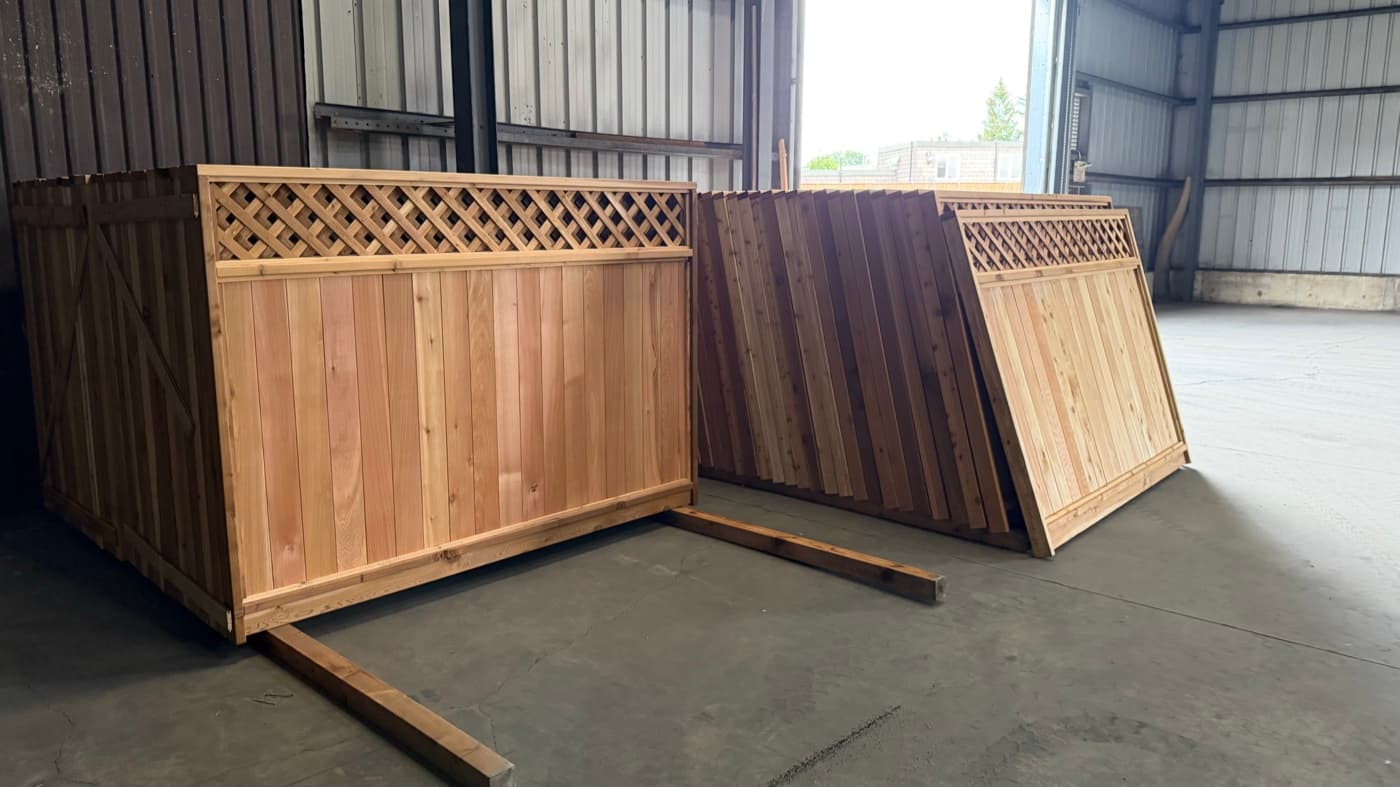
Here are ours, all 96 inches wide: the Solid Privacy Cedar stands a true 67.5″ high. The three Heritage lattice panels (diagonal, square, and Contractor grade) stand 69″. The Wood & Steel solid face is 66.5″, its lattice-top sibling 68″. The Good Neighbour shadowbox and the Pressure-Treated Lattice Top stand a full 72″, and the Pressure-Treated Privacy is the tallest of the line at a true 73.5″. Why the spread? Board coverage, frame layout and the crown decide the standing height of each style; the width never moves, because width is what your posts care about.
That 96-inch width is the layout number. Posts go on 96-inch centres, so a run is: total length in inches, divided by 96, rounded up: that’s your panel count; add one more post than panels to close the run. A 100-foot line is 1,200 inches: thirteen panels, fourteen posts, with the last bay cut down. Cutting a panel narrower is routine (they’re built to be trimmed at a rail, not the lattice); cutting several because the layout assumed the wrong width is the expensive version.
Height is where nominal sizes bite hardest, for three reasons. Fence bylaws are written in real inches: if your municipality caps a backyard fence at 2 metres, a true-72″ panel on a 4-inch gravel reveal is fine, but do that math with the true height, not the trade name. Grade steps matter too: on a slope, panels step down in level runs, and the step size plus the true panel height decides where the top of the fence lands against a neighbour’s sightline. And if you’re matching an existing fence (meeting a neighbour’s 72-inch line with our 69-inch lattice panel), the three inches shows unless you plan the post caps and reveal around it.
None of this is unique to us; every manufacturer’s “6×8” lands somewhere a little different, and the big-box aisle is looser about publishing it. Our rule is just that the tape-measure number is printed where you buy: on every product page, on the spec table, and now in this note. Measure the run, count in true inches, and the last panel of the fence goes in as easily as the first. If the run has a complication (a slope, a bylaw, an old fence to meet), send us the numbers and we’ll do the layout with you before you order.